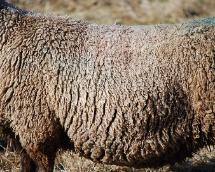
| When judging the WOOL (10 points) Of fine texture, tight with great density, and of sufficient length of staple, covering the whole of the body. Wool being down to the hocks and knees, and right up to the cheeks, with a full fore top, but not covering the eyes, or across the bridge of the nose. Wool of 1/2 to 3/8 blood (The term "Blood" Denotes fineness:"more blood" means finer wool) or 56 to 60 (spinning count) is preferred. Medium to Medium/Fine Crimp (The natural waviness in fibers). Average Staple (length of fiber) 2.5-3 inches long. 24 to 31 Microns (average diameter of the wool fiber) |
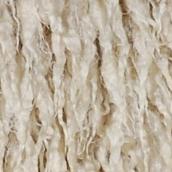
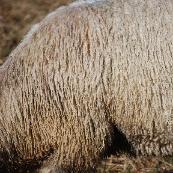
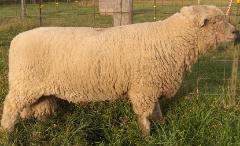
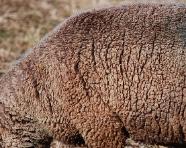

Pictures #1
Pictures #2
Pictures #3
Pictures #4
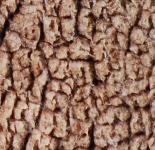
| Faces: Below are different examples of the types of faces seen on the Babydoll Southdown Sheep. |
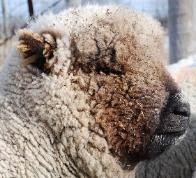
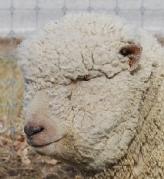
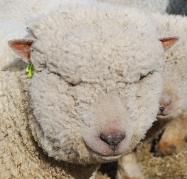

| Above are sheep that are showing different degrees of what is called "Wool Blind" were the wool keeps growing around the eyes, until it totally covers the eyes and the sheep can no longer see. This is a fault that should be worked on and a breeder should use breeding practices that discourages this problem. Sheep that have a tendency to become wool blind do need to be trimmed regular around the eye area so the sheep can see well and not become 'blind'. |
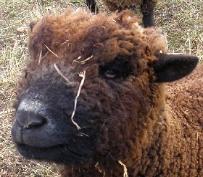
| This is a good examples of a wooly faced babydolls,with plenty of space around the eyes. Not showing signs of becoming ''Wool Blind" as wool grows. |
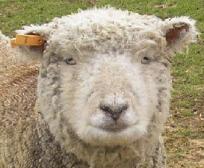
| Examples of "WOOL BLIND" |
Open Faces:
| Wording for open face........ |
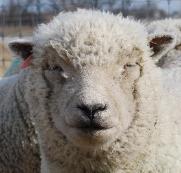
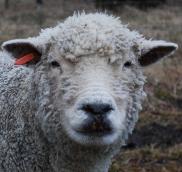
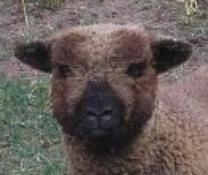
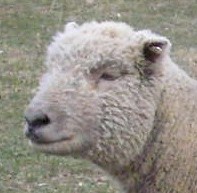
More Faces
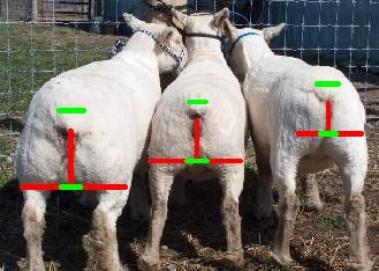
| The twist is the depth of muscling top to bottom of the rear leg (Vertical Line #1) Also evaluated is the size and roundness of the rear leg line (Horizontal Line #2). Green Lines in pictures show were hands are placed by the judge to determine Twist length. Hands are placed at the top of the tail and at the crotch. You can see by the pictures the different sized Twists for each sheep. The Southdown is traditionally a premium meat breed and became popular because of its excellent muscling and flavorful meat. Sheep are always judged by the quality of their muscling on a well structured frame as well as the quality of their wool for spinning. The loin, which is where the chops come from, should be long wide and deep. The rear legs which are the roasts or steaks should be well muscled and large. |
| Twist and Hind Quarters |
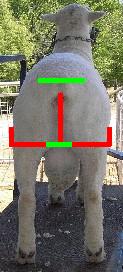
| #1 |
| #2 |
Fleece or Wool quality has been evaluated in several ways over the centuries. Terms to understand :
* Staple length: The length of a 12 months growth of wool fiber not stretched.
* Crimp: Waves in the individual fiber, small waves close together are softer fleece. Waves further apart are coarser.
* The term 'Blood': Used to interpret fineness displayed in fractions.
* Spin count: Measurement on a wool Skein.
* Microns: Measurement.
Most Old type Southdowns (white Babydoll Southdowns) are evaluated as 1/2 to 3/8 blood. 1/2 blood translates
to a 60 to 62 skein spin count and a fiber of 22.5 to 25 microns in diameter, with medium fine crimp and 2.5 to 3"
staple length. 3/8 blood translates to a 58 spin count and a 24.5to 26.5 micron with medium crimp and 2.5 to 3.5"
staple length.Many of our Black Babydolls are 1/4 blood which is coarser then white fleeces. 27-31 micron,
medium coarse crimp and 2.5 to 4" staple length.
* Staple length: The length of a 12 months growth of wool fiber not stretched.
* Crimp: Waves in the individual fiber, small waves close together are softer fleece. Waves further apart are coarser.
* The term 'Blood': Used to interpret fineness displayed in fractions.
* Spin count: Measurement on a wool Skein.
* Microns: Measurement.
Most Old type Southdowns (white Babydoll Southdowns) are evaluated as 1/2 to 3/8 blood. 1/2 blood translates
to a 60 to 62 skein spin count and a fiber of 22.5 to 25 microns in diameter, with medium fine crimp and 2.5 to 3"
staple length. 3/8 blood translates to a 58 spin count and a 24.5to 26.5 micron with medium crimp and 2.5 to 3.5"
staple length.Many of our Black Babydolls are 1/4 blood which is coarser then white fleeces. 27-31 micron,
medium coarse crimp and 2.5 to 4" staple length.
fine fleece with very tiny crimp in fiber. Medium fine a bit longer in staple and with slightly farthur apart & larger crimp
This opened labled fleece has pretty fine crimp but on this sample of shoulder fleece but the fibers group up and fall
open .
This opened labled fleece has pretty fine crimp but on this sample of shoulder fleece but the fibers group up and fall
open .